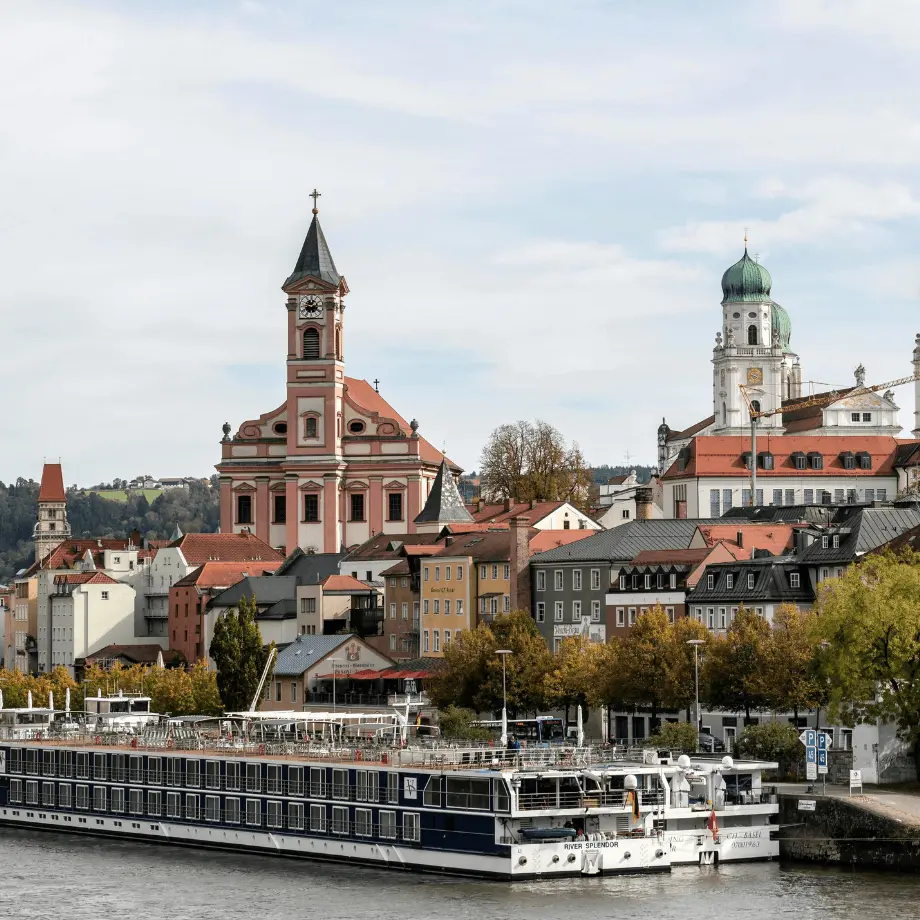
Welcome to our inaugural feature of the Ancient City of the Month, where we unpack the raw history and unspoken reality of Europe’s most iconic ports. First up is Passau, Germany—a jaw-dropping medieval and Baroque marvel anchored right on the Austrian border. To the millions of North American travelers who embark here every year, Passau looks like a flawless movie set. Known globally as the 'Dreiflüssestadt' (The City of Three Rivers), it marks the exact geographic point where the mighty Danube, the turquoise Inn, and the dark Ilz rivers converge. But beneath the pristine pastel facades and winding cobblestone alleys lies a gritty maritime history shaped by centuries of heavy salt trade, elite prince-bishops, and fierce survival against the elements.
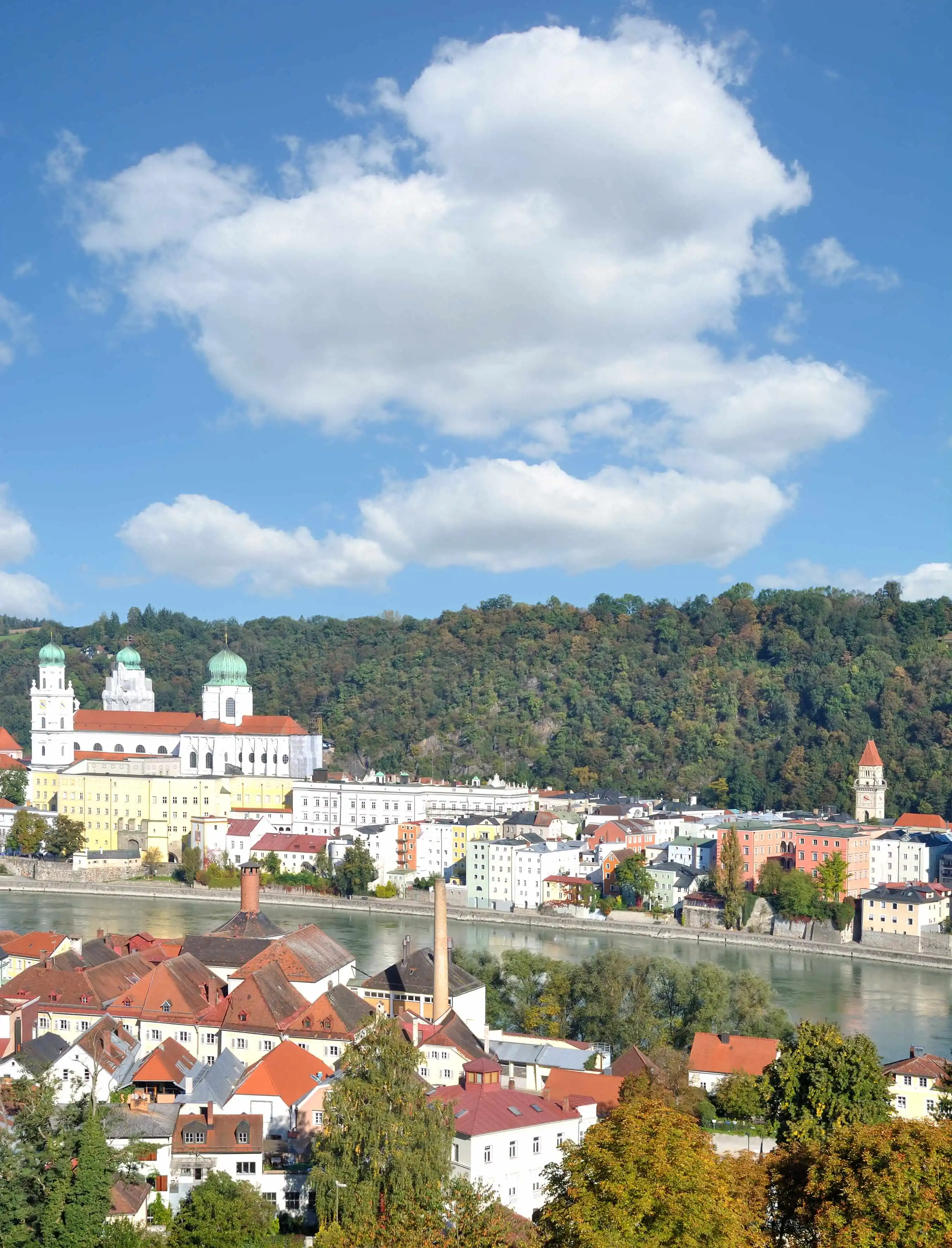
To understand Passau, you have to understand its dark relationship with water. While river cruise brochures paint these rivers as a peaceful backdrop, Passau has suffered from cataclysmic flooding for over a thousand years. Because the city sits on a narrow peninsula squeezed by three massive water currents, heavy alpine thaws can instantly turn the old town into an underwater zone. If you walk past the historic Altes Rathaus (Old Town Hall), look closely at the outer walls. You will see carved high-water markers showing historical flood levels that are absolutely terrifying. The historic 1954 and recent 2013 floods saw water levels breach over 40 feet, submerging the entire first floors of these centuries-old Baroque buildings. The locals don't panic; they live by a stoic maritime culture, evacuating their shops and power stations with military precision, only to wash away the mud and reopen for business a few days later.
“"The ocean has a way of stripping away the noise of the world, leaving only the truths you were running from."
Long before it became a premium sanctuary for retired American cruisers, Passau was an absolute powerhouse of the Holy Roman Empire. Founded originally by the Celts and later fortified by the Romans as Castra Batavia, it grew immensely wealthy during the Middle Ages by completely controlling the regional salt trade—which was essentially the oil of the ancient world. But Passau’s coolest hidden historical secret is its legendary blade and sword manufacture. During the Renaissance, Passau smiths were world-renowned for forging the highest quality swords, stamped with the famous 'Passau Wolf' emblem on the blade. Superstitious medieval warriors across Europe believed the Passau Wolf conferred absolute invulnerability in battle, making these blades fetch a massive premium on the black market. Today, the legendary 13th-century fortress, Veste Oberhaus, still looks down from the cliffs, a massive stone reminder of the city's military and political dominance.
The absolute crown jewel of the old town skyline is St. Stephen’s Cathedral (Dom St. Stephan), a staggering masterpiece north of the Alps rebuilt by Italian architects after a devastating fire in 1662. This architectural transition gave Passau its distinct, bright Mediterranean baroque flair, earning it the nickname 'The Venice of Bavaria.' Inside the blinding white stucco and gold leaf columns sits Passau’s ultimate tourist draw: the world’s largest cathedral pipe organ. Boasting a jaw-dropping 17,974 pipes and 233 registers, this acoustic beast requires a master artist to play. For an elite experience, don't miss the 30-minute noon organ concerts held daily between May and September. The acoustic reverberation inside the massive dome is an emotional, hair-raising experience that will easily be the highlight of your entire European journey.
Now, let’s talk raw crew logistics and passenger traps that the big cruise lines will never share with you. Passau is the ultimate 'Home Port'—the starting or ending point for the legendary 'Enchanting Danube' river cruise routes heading toward Vienna and Budapest. But here is the catch: Passau has multiple mooring berths scattered along the river. While lucky ships dock directly at the Donaustraße or Fritz-Schäfer Promenade—meaning passengers can step off the gangway and immediately walk into the old town center—multiple vessels get forced to dock at 'Lände Lindau' (3 km downstream) or 'Winterhafen Racklau' (2 km upstream). If your ship is docked at these outer industrial berths, do not let the cruise line force you into buying an expensive private shuttle. You can easily take local bus lines 3, 8, or 11 for a couple of euros and reach the center in 5 minutes flat.